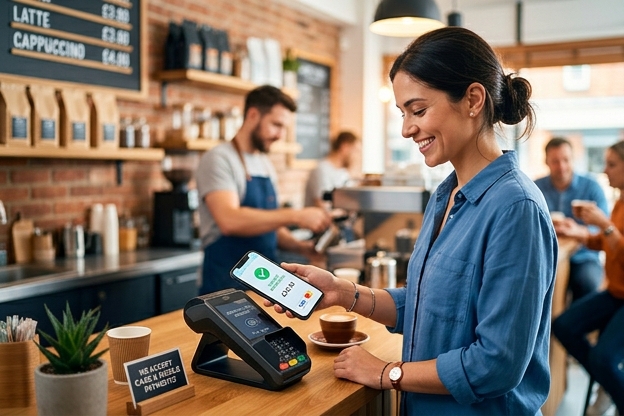

Find the best cryptocurrency payment gateway for fast and secure crypto transactions. Learn how to compare speed, security, stablecoin support, compliance, and settlement options for your business with expert insights from High Risk Credit Card Processing
Why Businesses Are Prioritizing the Best Cryptocurrency Payment Gateway for Fast and Secure Crypto Transactions
Slow settlement, cross-border friction, chargeback exposure, and payment processor restrictions can squeeze margins fast. That is exactly why more merchants are searching for the Best Cryptocurrency Payment Gateway for Fast and Secure Crypto Transactions instead of relying only on legacy card rails. For high-risk and globally distributed businesses, crypto payments can reduce delays, expand market reach, and add a layer of operational flexibility that standard payment stacks often fail to provide.
High Risk Credit Card Processing has worked with merchants that were losing deals because customers wanted to pay in Bitcoin, USDT, or Ethereum while the business only accepted cards or bank wires. In those cases, the right crypto gateway did more than add a payment option. It improved authorization flow, simplified international collection, and gave the finance team faster access to cleared funds.
A cryptocurrency payment gateway is a service that lets a business accept digital assets from customers and convert, settle, or route those funds according to the merchant’s preferences. The best gateways focus on payment speed, wallet security, compliance controls, supported coins, and easy integration with websites, invoices, subscriptions, and point-of-sale systems.
For merchants, the value is practical: fewer payment bottlenecks, broader customer acceptance, and stronger control over how crypto funds are received, stored, and converted.
Table of Contents
- What Makes a Crypto Payment Gateway Stand Out
- Why Merchants Are Adding Crypto Payments Now
- Features That Matter Most for Speed and Security
- Gateway Fit by Business Scenario
- How to Choose the Right Gateway
- A Real Merchant Case from High Risk Credit Card Processing
- Risks, Compliance Issues, and Operational Limits
- Implementation Steps for a Smooth Launch
- Where Crypto Payment Gateways Are Headed
What Makes a Crypto Payment Gateway Stand Out
Not every crypto gateway is built for real commerce. Some are little more than wallet connectors. Others are enterprise-grade payment systems with settlement tools, fraud screening, KYC support, tax reporting exports, and API-based automation. The gap between those two categories is enormous.
The best gateway usually gets four things right at the same time: customer payment experience, merchant-side security, compliance workflow, and treasury flexibility. If any one of those fails, the business feels it quickly. A checkout that confuses buyers cuts conversion. Weak wallet management raises security risk. Poor compliance controls can trigger banking friction. Limited settlement options can create accounting headaches.
“A crypto payment gateway should be judged like any serious payment infrastructure: by uptime, reconciliation quality, settlement predictability, and risk controls, not by hype around the token itself.”
According to Chainalysis reporting published in recent years, stablecoins have become central to practical transaction volume across many markets because they reduce volatility concerns during payment acceptance. That matters for merchants that want crypto speed without exposing themselves to large same-day price swings.
Why Merchants Are Adding Crypto Payments Now
Merchants are not adding crypto just to look modern. They are responding to actual customer behavior and cost pressure.
According to Deloitte’s 2024 retail and merchant research on digital payments, a growing share of businesses reported stronger interest in digital asset acceptance for cross-border commerce, customer acquisition, and brand differentiation. At the same time, many merchants are evaluating digital payment diversification because dependence on a single payment rail creates avoidable revenue risk.
Here is why adoption keeps moving forward:
- Faster cross-border settlement than many traditional bank transfers
- No classic card chargeback model on many crypto transactions
- Better access for customers in regions with limited card penetration
- Support for high-average-order-value transactions
- Operational flexibility through stablecoin settlement
- Potential reduction in processing friction for some high-risk categories
That said, crypto is not a replacement for every payment type. In most strong payment stacks, it complements cards, ACH, wire, and local payment methods rather than eliminating them.

Features That Matter Most for Speed and Security
If your shortlist is built only around transaction fees, you are probably comparing the wrong things. The strongest gateways create value through risk reduction and back-office efficiency.
Fast confirmation and settlement options
Some gateways allow merchants to accept payment after a risk-calibrated number of blockchain confirmations or via instant settlement logic for selected networks. If your business relies on quick order release, this can directly affect fulfillment speed.
Automatic conversion to fiat or stablecoins
For businesses with tight margins, automatic conversion is often more important than coin variety. Holding volatile assets on the balance sheet may not fit accounting policy, lender covenants, or cash flow planning.
Secure wallet architecture
Look for multi-signature controls, cold storage practices, withdrawal approvals, role-based access, and clear incident response procedures. A polished dashboard means very little if wallet governance is weak.
Compliance and audit readiness
The payment side of crypto has matured, but regulators remain focused on anti-money laundering controls, sanctions screening, and transaction transparency. According to guidance and enforcement trends from FinCEN and global financial regulators through 2023-2025, businesses handling digital asset payments need clear monitoring and documentation practices, especially when operating internationally.
Developer and finance team usability
The best tools work for more than engineers. Finance teams need exportable reporting, payment status visibility, refund workflows, and reconciliation support. Support teams need simple payment links and invoice tools.
Gateway Fit by Business Scenario
The right gateway often depends less on brand recognition and more on business model. Here is a practical comparison based on merchant needs.
| Business Type | Primary Payment Need | Best Gateway Priority | Recommended Settlement Preference |
|---|---|---|---|
| High-ticket B2B software | Fast international invoice payment | Stablecoin support, accounting exports, API invoicing | USDT or automatic USD conversion |
| Online gaming or betting-adjacent brands | Risk-managed deposits with strong compliance controls | KYC tools, transaction monitoring, wallet security | Mixed stablecoin and fiat conversion |
| Ecommerce stores with global buyers | Simple checkout and low payment friction | Plugin support, fast confirmations, mobile wallet UX | Partial auto-conversion to local operating currency |
| Freelance and digital agencies | Borderless invoice collection | Payment links, low setup burden, recurring invoicing | Stablecoin retention for contractor payouts |
| Adult, nutraceutical, or other high-risk merchants | Payment continuity and lower dependence on card approvals | Multi-rail strategy, compliance reviews, fraud controls | Immediate stablecoin conversion with treasury rules |
How to Choose the Right Gateway
If you are evaluating providers, use a structured process. The strongest choice is usually the one that matches your payment flow, legal footprint, and treasury policy.
- Map your use case. Define whether you need cart checkout, recurring billing, payment links, POS acceptance, or B2B invoicing.
- Set your settlement policy. Decide if you want to hold crypto, accept only stablecoins, or convert everything into fiat immediately.
- Review jurisdiction support. Confirm the provider can legally and operationally support the countries where you sell.
- Audit security controls. Review wallet custody, approval workflows, access permissions, and breach response standards.
- Test the integration. Use sandbox tools to evaluate speed, order matching, webhooks, and refund handling.
- Check reporting. Finance teams should verify reconciliation exports, tax data fields, and ERP compatibility.
- Run a small pilot. Start with one product line, region, or customer segment before full rollout.
A common mistake is choosing based on coin count alone. More assets do not automatically mean more revenue. For many merchants, broad support for Bitcoin, Ethereum, and major stablecoins covers the bulk of customer demand.
“When a merchant asks for the best cryptocurrency payment gateway, I first ask what happens after the payment lands. Treasury policy, compliance rules, and accounting requirements determine whether a gateway is usable in the real world.”
A Real Merchant Case from High Risk Credit Card Processing
I worked with a digital subscription merchant that sold into Latin America, Southeast Asia, and parts of Eastern Europe. Their biggest issue was not traffic. It was failed collections. Card acceptance was inconsistent, wire transfers were too slow, and support tickets piled up when customers asked to pay with crypto.
At High Risk Credit Card Processing, we helped them evaluate a crypto payment gateway that supported stablecoin settlement, API-generated invoices, and automated payment confirmation. We did not position it as a replacement for cards. We built it as a parallel lane for customers who already preferred crypto or had trouble with local banking rails.
Within the early rollout period, the merchant saw a meaningful drop in payment delay for cross-border accounts. Their finance team also appreciated that settlement could be routed into a more predictable stablecoin treasury path instead of leaving receipts exposed to intraday market swings. Just as important, the customer support team had fewer “where is my payment” escalations because the gateway gave cleaner transaction status updates.
In another case, I advised a high-risk ecommerce operator that wanted crypto acceptance mainly as a resilience strategy. Their concern was not hype or token growth. It was processor concentration risk. By adding a vetted crypto gateway and limiting acceptance to selected geographies and order bands, they created a backup revenue channel that reduced dependence on one acquiring relationship.

Risks, Compliance Issues, and Operational Limits
Crypto payments can be powerful, but they are not frictionless. Businesses that ignore the downside usually pay for it later in operations, compliance, or customer support.
Volatility risk
If you hold volatile assets without a treasury policy, your revenue can fluctuate sharply. This is why many merchants prefer instant conversion or stablecoin-only acceptance.
Regulatory complexity
Rules differ by country, industry, and transaction type. A gateway may operate smoothly in one market and face more restrictive obligations in another. Sanctions screening and suspicious activity monitoring remain non-negotiable.
Customer error and irreversibility
Wallet mistakes, wrong network selection, and irreversible transfers can create support issues. Unlike card payments, many blockchain transfers cannot simply be reversed by a bank.
Accounting and tax treatment
Finance teams need clarity on revenue recognition, asset treatment, and reporting standards. If the gateway’s exports are weak, monthly close becomes painful.
According to PwC’s recent digital asset and finance transformation commentary, businesses adopting crypto-related payment activity need stronger internal controls than they often expect, especially around custody decisions, audit trails, and valuation treatment.
Implementation Steps for a Smooth Launch
The best launch plans are conservative, measured, and operationally clean. Start narrow, then expand.
Use this rollout framework:
- Select a limited set of accepted assets, usually Bitcoin plus one or two major stablecoins
- Enable crypto first for international orders or invoice-based transactions
- Publish clear customer instructions on network choice and payment timing
- Set internal approval rules for refunds and exception handling
- Train support and finance staff before turning the feature on
- Track conversion rate, payment completion time, settlement lag, and support ticket volume
For high-risk merchants, I generally recommend integrating crypto into a broader payment continuity strategy. That means keeping card processing, ACH, or local methods in place while using crypto where it is genuinely advantageous. The strongest stack is rarely single-rail.
Where Crypto Payment Gateways Are Headed
The market is moving from speculative enthusiasm to operational utility. That is healthy. Businesses care less about novelty and more about settlement certainty, stablecoin growth, and integration with standard finance systems.
Three trends stand out:
- Stablecoin-led payments: More merchants are choosing stablecoins over volatile assets for day-to-day acceptance.
- Better enterprise tooling: Expect stronger reconciliation, ERP connectivity, and compliance automation.
- Multi-rail orchestration: Crypto gateways will increasingly sit beside cards, bank payments, and local methods in one unified checkout strategy.
According to industry analysis from Gartner in 2024 around emerging payment infrastructure and digital finance modernization, businesses are steadily shifting from isolated payment tools toward integrated ecosystems that support multiple rails, richer data visibility, and stronger control over risk. That direction fits crypto payments perfectly when they are deployed with discipline rather than as a standalone experiment.
Conclusion
The Best Cryptocurrency Payment Gateway for Fast and Secure Crypto Transactions is not simply the cheapest or the most talked about. It is the one that matches your business model, supports secure settlement, fits your compliance obligations, and helps customers pay without friction. For the right merchant, crypto acceptance can improve international collection speed, reduce reliance on a single payment channel, and create a more resilient payment stack.
High Risk Credit Card Processing recommends these next steps:
- Audit your current payment bottlenecks and identify where crypto can solve a real collection problem.
- Run a controlled pilot with stablecoin-first settlement and strict reporting workflows.
- Choose a gateway that supports both customer convenience and back-office discipline, especially for compliance and reconciliation.
References
- Deloitte: Merchant and retail payment research highlighting business interest in digital asset acceptance and payment diversification.
- Chainalysis: Market intelligence showing the growing practical role of stablecoins in digital asset transaction activity.
- FinCEN: Regulatory guidance shaping AML expectations and monitoring responsibilities for businesses handling digital asset flows.
- PwC: Analysis on digital asset controls, finance operations, and accounting considerations for businesses adopting crypto-related processes.
- Gartner: Industry perspective on integrated payment infrastructure, multi-rail strategies, and financial technology modernization.
FAQ
What is the Best Cryptocurrency Payment Gateway for Fast and Secure Crypto Transactions?
The best option depends on your business model. For most merchants, the right gateway offers fast confirmations, strong wallet security, stablecoin support, reporting tools, and either automatic fiat conversion or flexible treasury settings. A provider that works well for ecommerce may not be the best fit for a high-risk or enterprise B2B merchant.
Are crypto payment gateways safe for online businesses?
They can be very safe if the provider uses strong custody controls, role-based permissions, transaction monitoring, and secure settlement workflows. Safety also depends on your internal procedures, especially who can approve withdrawals, refunds, and wallet changes.
Should a merchant accept Bitcoin, stablecoins, or both?
Many merchants do best with both, but with a stablecoin-first settlement policy. Bitcoin helps reach a broader buyer base, while stablecoins reduce volatility and make accounting easier. The right mix depends on customer demand and treasury tolerance.
Can crypto payment gateways reduce chargeback risk?
Yes, in many cases they can reduce exposure to traditional card chargebacks because blockchain payments do not follow the same dispute model as card networks. That said, businesses still need clear refund, fraud review, and customer service policies.
How long do crypto transactions take to settle for merchants?
Settlement speed varies by blockchain, network congestion, and gateway rules. Some payments can be recognized within minutes, while others take longer if more confirmations are required. Stablecoin networks often provide a practical balance of speed and predictability for merchants.