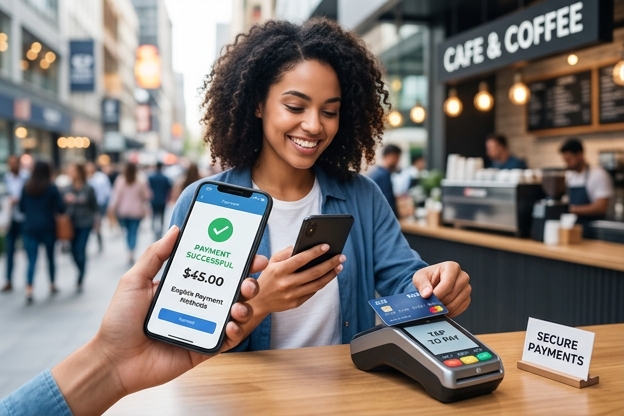
Learn what a debit card is, how it works, key pros and risks, and how to choose the right debit card for fees, security, ATM access, and daily use
Debit cards are convenient until the wrong one drains your budget
If you are comparing checking accounts, trying to avoid fees, or deciding whether a debit card is safer than carrying cash, you are asking the right questions. Best Title: Debit Card: What It Is, How It Works, and How to Choose the Right One is more than a basic banking topic because the debit card you use affects spending control, fraud exposure, ATM access, and even how smoothly recurring payments clear. At High Risk Credit Card Processing, we work with businesses and payment flows every day, so we see both sides of the transaction: how consumers use debit and how merchants process it.
A lot of people choose a debit card almost by accident. They open a checking account, accept the first card mailed to them, and only later notice foreign transaction fees, weak fraud alerts, out-of-network ATM charges, or daily spending limits that do not fit real life. That is where a smarter selection process matters.
A debit card is a payment card linked directly to your checking account or cash balance. When you use it, the money typically comes out of your account rather than being borrowed from a lender, which is the key difference between debit and credit.
Used well, a debit card can help you stay on budget, reduce debt risk, and pay almost anywhere cards are accepted. Used carelessly, it can expose your primary cash account to overdrafts, fraud headaches, and avoidable fees.
Table of Contents
- What a debit card actually is
- How debit cards work behind the scenes
- Debit vs. credit vs. prepaid
- Why many consumers prefer debit
- Risks and drawbacks to watch
- How to choose the right debit card
- Which debit card fits different lifestyles
- What we have seen in real payment environments
- Best practices for safer daily use
What a debit card actually is
A debit card is a bank-issued or fintech-issued payment card tied to your deposit account. In most cases, that means a checking account. When you swipe, tap, insert, or pay online, the transaction routes through a card network such as Visa or Mastercard, but the money is ultimately drawn from your own available balance.
That sounds simple, but there are several versions of debit:
- Traditional bank debit cards linked to checking accounts
- Online banking or neobank debit cards with app-based controls
- Business debit cards for operational spending
- Rewards debit cards that offer cash back or merchant perks
- Prepaid cards that look similar but are funded separately and are not the same as true debit
The important point is this: a real debit card is tied to a transaction account, not a revolving credit line. You are spending money you already have, or in some cases money your bank temporarily covers through overdraft settings.
How debit cards work behind the scenes
Every debit purchase runs through a processing path that most consumers never see. When you make a purchase, the merchant sends the transaction through a processor and card network for authorization. Your bank checks whether the account is open, whether funds are available, and whether any fraud triggers fire. If approved, the merchant receives authorization, and the funds are later settled from your account.
Debit card transactions usually happen in one of two ways:
- PIN debit: You enter a personal identification number, and the transaction may route over a debit network.
- Signature or no-PIN debit: You authorize with a signature, tap, or online credential, and the transaction may route over a major card network.
According to the 2024 Diary of Consumer Payment Choice published by the Federal Reserve Bank of Atlanta, cards remain one of the most frequently used payment methods in the United States, with debit continuing to hold a major share of everyday purchases. That matters because banks are competing harder on mobile controls, ATM access, and fee transparency than they did a few years ago.
Debit vs. credit vs. prepaid
Many people treat these cards as interchangeable because they work at the same checkout terminal. They are not interchangeable in the ways that matter most: cash flow, liability, rewards, and consumer protections.
| Card Type | Where the Money Comes From | Best Use Case | Main Tradeoff |
|---|---|---|---|
| Bank Debit Card | Your checking account balance | Everyday spending and budget control | Fraud can affect your cash directly |
| Rewards Credit Card | Borrowed funds from issuer | Travel, large purchases, rewards strategy | Interest charges if not paid in full |
| Prepaid Card | Funds loaded onto the card in advance | Controlled spending without a bank account | Often more fees and fewer features |
| Business Debit Card | Business checking account | Operational purchases and employee controls | Can complicate expense governance if limits are weak |
Credit cards usually offer stronger purchase protections and more robust rewards. Prepaid cards can help with spending discipline, but many come with activation, reload, or monthly maintenance fees. Debit sits in the middle: practical, widely accepted, and useful for real-time money management.
“The best debit card is not the one with the flashiest app. It is the one that matches how often you use ATMs, how you travel, and how quickly you need fraud support when something goes wrong.”
Why many consumers prefer debit
Debit cards remain popular because they are simple. You do not have to manage a monthly credit card bill, and for people focused on staying out of debt, that simplicity is a real advantage.
Here are the biggest benefits:
- Better spending discipline: Since purchases draw from your balance, it is easier to stay within budget.
- Broad acceptance: Debit works for in-store, online, and contactless purchases almost everywhere cards are accepted.
- Fast account visibility: Most banks show transactions and alerts nearly in real time.
- Lower debt risk: There is no revolving balance unless overdraft or linked credit features come into play.
- ATM access: You can withdraw cash directly, which credit cards generally should not be used for because of expensive cash advance fees.
J.D. Power’s 2024 U.S. Direct Banking Satisfaction Study highlighted that digital account tools, dispute resolution, and fee transparency continue to shape consumer satisfaction. That trend favors debit card programs with strong app controls, instant lock features, and easy dispute tracking.
Risks and drawbacks to watch
Debit is not perfect, and this is where many quick articles fall short. The biggest downside is that a debit card is connected to your everyday cash. If fraud happens, your grocery money, rent money, or payroll buffer can be tied up while the issue is reviewed.
Main risks include:
- Overdraft charges: If your bank approves transactions beyond your balance, you may face fees unless you have opted out or set up safeguards.
- Out-of-network ATM fees: One fee from the ATM owner plus another from your bank can turn a small withdrawal into an expensive habit.
- Merchant holds: Hotels, gas stations, and rental car companies may place temporary holds above the final charge.
- Fraud timing: Even with protections, recovering funds can be stressful if your cash flow is tight.
- Weaker rewards: Debit rewards exist, but they are generally less generous than credit card rewards.
According to Consumer Financial Protection Bureau guidance updated in recent years, error resolution timing and your reporting speed matter. If you notice a fraudulent debit card transaction, reporting it quickly can significantly affect your liability and how fast the issue is handled.
How to choose the right debit card
Choosing the right debit card is really about choosing the right account ecosystem. The card itself matters, but the surrounding policies matter more. Use this checklist before you apply or switch.
- Review monthly account fees. Some banks waive them with direct deposit, minimum balances, or student status.
- Check ATM network coverage. If you use cash often, free in-network access can save a surprising amount over a year.
- Study overdraft policy. Look for low-fee, no-fee, or opt-out options if you want stricter spending control.
- Look for real-time alerts. Transaction notifications, instant lock features, and biometric app access are no longer optional.
- Compare foreign transaction and international ATM fees. Travel can expose weak debit products quickly.
- Ask about fraud support. Twenty-four hour support and fast replacement shipping matter when your main spending card is compromised.
- Check digital wallet compatibility. Apple Pay, Google Pay, and Samsung Wallet support add convenience and security layers.
If you are comparing traditional banks versus fintechs, the tradeoff is usually branch access versus app-first convenience. Fintech debit products often shine in budgeting tools, but large banks may offer wider ATM networks, stronger service depth, and easier cash deposit options.
“Consumers often focus on whether a debit card is free. A better question is whether the account silently charges you through ATM fees, overdrafts, or poor support during disputes.”
Which debit card fits different lifestyles
The right choice depends on how you spend, not on a generic best-of list.
For students and first-time account holders
Look for no monthly fee, no minimum balance, strong mobile controls, and early direct deposit features. Students usually benefit more from simplicity than from niche perks.
For frequent travelers
Prioritize low foreign transaction fees, broad international acceptance, and emergency card replacement. A debit card can be useful for local cash access abroad, but it should not be your only travel payment method.
For families managing a household budget
Choose a bank with shared account visibility, spending alerts, and easy transfers between savings and checking. Some debit programs also allow sub-accounts or spending controls for teens.
For freelancers and small business owners
Separate business and personal spending. A business debit card tied to a dedicated account makes tax prep cleaner, improves bookkeeping, and reduces charge confusion.
What we have seen in real payment environments
I have seen firsthand how debit card strategy changes spending behavior when consumers and merchants treat it as part of a system rather than just a plastic card. One client we advised through High Risk Credit Card Processing operated a subscription-heavy online business with a customer base that strongly preferred debit over credit. Their support team kept seeing failed renewals tied to expired cards, frozen accounts, and tight available balances near billing dates.
We helped them restructure their billing communication around debit usage patterns. That included clearer pre-billing reminders, smart retry timing, and customer education on keeping a backup payment method. Within one quarter, the client saw fewer avoidable declines and smoother retention. The lesson was simple: debit users often manage cash more actively than credit users, so timing and transparency matter.
In another case, I worked with a small retail operator who used a personal debit card for business inventory runs. At first, it felt efficient. Then a fraud event froze part of the account during a dispute review, and suddenly payroll and supplier purchases became harder to manage. We recommended separating accounts, using a business debit card for controlled operational spending, and keeping a reserve buffer outside the primary spending account. That change reduced risk immediately and made reconciliation far easier.
These are not edge cases. They show why choosing the right debit setup is about more than fee shopping. It is about cash flow resilience.
Best practices for safer daily use
If you want the convenience of debit without the common headaches, a few habits make a major difference.
- Turn on instant transaction alerts for every purchase, ATM withdrawal, and declined attempt.
- Keep a small buffer in checking if you use recurring autopay services.
- Use your bank’s card lock feature when traveling or when the card is not in regular use.
- Avoid public Wi-Fi when entering card details online unless you are using a trusted VPN.
- Check pending transactions before moving money out of the account.
- Keep a backup payment method in case of fraud review or merchant holds.
The Nilson Report’s recent payment industry analysis has consistently shown that electronic payments continue to grow in volume, which also means fraud prevention tools are becoming a bigger competitive differentiator among issuers. The best debit products in the market are increasingly defined by mobile security, not just by branch count.
One more practical point: if your checking account is your financial command center, your debit card should not be your only protection layer. A separate savings buffer, smart alerts, and selective use of credit for higher-risk transactions create a more durable setup.
Conclusion
A debit card can be the right everyday payment tool if you want convenience, wide acceptance, and tighter control over spending. It works best when the account behind it has low fees, strong fraud tools, broad ATM access, and policies that match the way you actually spend. The wrong debit card is not just mildly annoying; it can cost you in overdrafts, delays, and unnecessary stress.
At High Risk Credit Card Processing, our recommendation is straightforward:
- Compare the account terms behind the card, not just the card branding itself.
- Choose a provider with instant alerts, simple dispute support, and an ATM network you will really use.
- Keep debit for everyday budgeted spending and use a backup payment method for travel, hotels, and larger preauthorization-heavy purchases.
References
- Federal Reserve Bank of Atlanta, 2024 Diary of Consumer Payment Choice: Provided recent context on how often Americans use cards, including debit, for everyday spending.
- Consumer Financial Protection Bureau: Offered guidance on debit card error resolution, fraud reporting timing, and consumer protection considerations.
- J.D. Power 2024 U.S. Direct Banking Satisfaction Study: Highlighted the role of mobile tools, fee transparency, and service quality in account satisfaction.
- The Nilson Report, recent payment industry reporting: Supported the broader trend of continued growth in electronic and card-based payments.
FAQ
What is a debit card and how does it work?
-
A debit card is linked to your checking account or similar deposit account. When you use it, the purchase amount is typically deducted from your available balance after the transaction is authorized and settled.
Is a debit card safer than a credit card?
-
It depends on the situation. Debit can be safer for budgeting because you are not borrowing, but credit often has an edge for large disputed purchases, travel holds, and rewards. Many people use debit for daily essentials and credit for higher-risk transactions.
Can a debit card build credit?
-
Standard debit card use usually does not build credit because transactions are not typically reported to credit bureaus as loan repayment activity. If credit building is your goal, look at secured credit cards or specialized credit-building products.
Best Title: Debit Card: What It Is, How It Works, and How to Choose the Right One — what should I focus on first?
-
Start with the checking account terms behind the card. Focus on monthly fees, ATM access, overdraft policy, fraud alerts, and customer support speed before you worry about minor perks.
What fees should I watch for with a debit card?
-
The most common costs include:
Monthly maintenance fees
Out-of-network ATM fees
Overdraft or non-sufficient funds charges
Foreign transaction and international ATM fees
Rush replacement card fees in some programs
Should I use my debit card for online shopping?
-
You can, especially with trusted merchants and digital wallet protection, but many consumers prefer using credit for higher-ticket online purchases. If you use debit online, enable instant alerts and monitor your account closely.