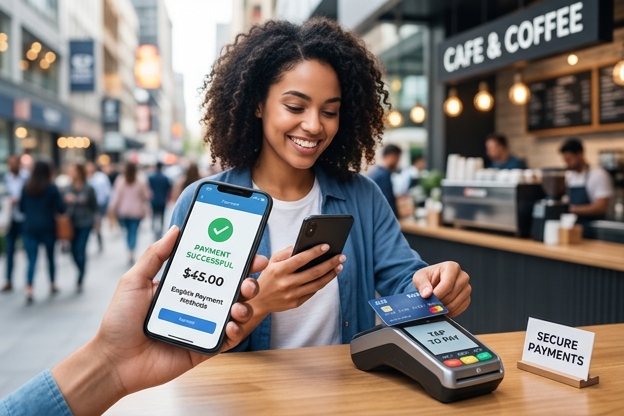
Learn how to choose the best prepaid card for online shopping with expert tips on security, fees, budgeting, benefits, risks, and the top options for safer digital purchases
Why a Prepaid Card for Online Shopping Makes Sense
If you shop online often, you already know the tradeoff: convenience is high, but so is exposure. A prepaid card for online shopping gives you a controlled spending tool that helps separate your everyday bank account from digital checkout pages, recurring subscriptions, unfamiliar merchants, and cross-border transactions. For consumers who want tighter budget control or extra privacy, it can be a practical layer of protection.
At High Risk Credit Card Processing, we work closely with payment behavior, fraud trends, merchant approval challenges, and transaction risk patterns. That gives us a useful lens on why prepaid products continue to attract shoppers, freelancers, parents, and even small business teams that want spending limits without the baggage of traditional credit.
A prepaid card for online shopping is a card loaded with a fixed amount of money before you spend. Unlike a credit card, it does not extend a line of credit, and unlike a debit card, it does not draw directly from your primary checking account at the time of purchase.
For many buyers, that simple difference matters. It limits overspending, reduces the financial impact of card compromise, and creates a cleaner boundary between online purchases and core household finances.
Table of Contents
- How prepaid cards work for online purchases
- Best prepaid card options by shopping need
- Key benefits for security and budgeting
- Potential downsides and limitations
- How to choose the right prepaid card
- Side-by-side comparison table
- Real-world use cases and brand experience
- Best practices for safer online spending
- What is changing in prepaid payments
How prepaid cards work for online purchases
A prepaid card is funded in advance. You add money through direct deposit, bank transfer, cash reload, mobile app transfer, or account-to-account funding depending on the issuer. Once the balance is available, you can use the card online anywhere the network is accepted, typically Visa or Mastercard.
The biggest operational difference is simple: your transaction can only go through if enough funds are available, and in many cases there is no overdraft. That makes prepaid cards attractive for people who want firm spending boundaries or who do not want online stores linked to a main debit account.
Some prepaid cards are general-purpose reloadable cards. Others are virtual prepaid cards created for e-commerce only. There are also retailer-specific gift-style prepaid cards, but those are less flexible because they work only within one merchant ecosystem.
According to the Federal Trade Commission, online shopping scams and payment fraud remain among the most commonly reported consumer issues. Meanwhile, the Nilson Report has continued to track substantial card fraud losses across the global payments ecosystem through recent years. That is one reason controlled-value payment methods still appeal to careful buyers.
Best prepaid card options by shopping need
There is no single best prepaid card for every shopper. The right fit depends on how you buy, how often you reload, whether you need ATM access, and whether you want a physical or virtual card.
General-purpose reloadable prepaid cards
These are the most versatile. They usually support online shopping, app-based balance management, direct deposit, and recurring transactions. They are a strong fit for regular online buyers who want a reusable card without tying purchases to a bank debit card.
Virtual prepaid cards
These cards are ideal for online-only use. Some issuers allow you to generate a card number instantly, use it for a single merchant, or even create temporary numbers. That reduces the risk of the same card credentials being reused across multiple merchants.
Teen and family spending cards
Parents often use prepaid cards to manage allowances, school-related spending, gaming purchases, and shopping limits. App controls can make them especially useful for families that want visibility without granting full debit account access.
Travel-friendly prepaid cards
For international online purchases or travel bookings, a travel-focused prepaid card may offer multicurrency support, reduced foreign transaction fees, or easier budget control than a standard bank debit card.
Business expense prepaid cards
Small teams sometimes use prepaid cards for ad spend, software renewals, contractor purchases, or isolated digital buying. While they are not a replacement for full corporate expense systems, they can reduce internal misuse when spending needs strict ceilings.
“Prepaid cards work best when the user is solving for control, not credit. If your priority is limiting risk exposure per transaction, prepaid can be smarter than linking your primary checking account everywhere you shop online.”
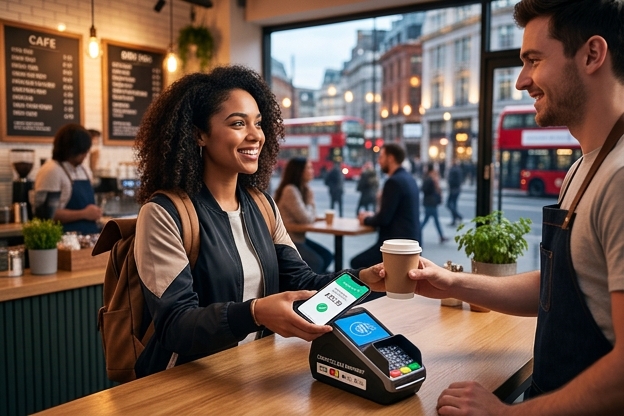
Key benefits for security and budgeting
The appeal of prepaid cards is not just convenience. The strongest value usually comes from risk management and spending discipline.
- Spending control: You can only spend the loaded balance, which makes impulse buying harder.
- Separation from primary funds: Your main bank account is not directly exposed at checkout.
- Useful for subscriptions: You can isolate recurring bills and avoid surprise overcharges.
- Helpful for shared spending: Families and teams can distribute controlled funds without full account access.
- Good for uncertain merchants: A prepaid balance limits damage if a lesser-known seller has poor security.
- Accessible: Many products are available to users who do not want or qualify for traditional credit.
There is also a behavioral upside. A 2024 consumer payments study from the Federal Reserve showed that cards remain central to how Americans pay, while budgeting concerns remain high under persistent cost pressure. A prepaid setup creates friction in a good way: before spending, you have to decide how much the purchase category deserves.
That is especially useful for categories where overspending tends to creep in, including apparel, digital subscriptions, app stores, gaming, and social media purchases.
Potential downsides and limitations
Prepaid cards are not perfect. The wrong card can create more frustration than value, especially if fees are high or acceptance is inconsistent.
Fees can quietly erode value
Some cards charge activation fees, monthly maintenance fees, reload fees, inactivity fees, ATM fees, replacement card fees, or customer service fees. If your average balance is small, those costs matter more than people expect.
Authorization holds can cause confusion
Some online merchants place temporary authorization holds above the purchase amount. On a prepaid card, that can make your available balance look lower than expected for a few days.
Refund timing may be slower
Returns and reversals can take time to post back to prepaid balances. If you are using the card for a time-sensitive replacement purchase, that delay can be annoying.
Some merchants are less prepaid-friendly
Certain services, especially recurring billing platforms, travel merchants, and age-restricted sectors, may reject some prepaid cards or require address verification to match issuer records.
Consumer protections vary by product structure
Not every prepaid product works exactly like a credit card from a protection standpoint. Many reloadable prepaid accounts in the U.S. are covered by consumer rules, but details vary by issuer, registration status, and usage pattern. Read the cardholder agreement.
How to choose the right prepaid card
The best choice starts with one question: what problem are you trying to solve? Security, budgeting, family controls, online-only privacy, or business spending all point to different products.
- List your main use case. Separate one-time shopping, subscriptions, travel, teen spending, and business expenses.
- Audit the fee structure. Check activation, monthly, reload, foreign transaction, and inactivity fees.
- Confirm online acceptance. Make sure the card works with major e-commerce merchants and digital wallets if needed.
- Look for app controls. Real-time alerts, card lock, transaction history, and instant reloads are worth having.
- Review refund and dispute terms. Fast support matters when a merchant issue appears.
- Check identity and address registration options. This helps with AVS checks and recurring payments.
- Compare reload convenience. Bank transfer is usually cheaper than cash reload networks.
If your top priority is online privacy and merchant risk control, a virtual prepaid option is often the strongest fit. If you need flexibility for regular shopping, a reloadable network-branded card is usually better.
Side-by-side comparison table
| Card Type | Best For | Key Strength | Main Limitation |
|---|---|---|---|
| Reloadable general prepaid card | Frequent online shoppers | Reusable, broad merchant acceptance | May have monthly or reload fees |
| Virtual prepaid card | Subscriptions and unknown merchants | Reduced credential exposure online | No in-store fallback if merchant needs physical card |
| Teen or family prepaid card | Parental controls and allowances | Spend limits and app monitoring | Feature quality varies by issuer |
| Travel prepaid card | Cross-border bookings and travel spend | Budget control for foreign purchases | Currency or reload terms may be complex |
| Business prepaid expense card | Controlled software and media spend | Limits misuse and simplifies budgeting | Not ideal for building business credit |
Real-world use cases and brand experience
At High Risk Credit Card Processing, we often talk with merchants and operators who see the payments world from both sides: the buyer side and the acceptance side. That perspective matters because many online shoppers assume every card transaction is equal. It is not. Merchant category, fraud screening, recurring billing setup, and chargeback patterns all affect how smooth a payment will be.
I once worked with an online seller operating in a higher-risk segment where customers regularly complained about failed checkout attempts. After reviewing the flow, one issue became obvious: a meaningful share of buyers were trying to use payment instruments with tight balance limits on carts that included taxes, shipping, or small authorization buffers. We helped the merchant clarify checkout messaging and card acceptance expectations. Cart abandonment dropped because customers understood why a prepaid balance that looked “close enough” was still failing.
In another case, I advised a small remote team that used a standard business debit card for software trials, ad testing, and one-off media buys. That created accounting noise and unnecessary exposure to recurring charges. We recommended moving that category into prepaid-controlled spending buckets. The result was cleaner reconciliation, faster cancellation control, and less friction when vendors were unfamiliar or offshore.
Those examples point to a broader truth: prepaid cards are strongest when they are used intentionally. They are not just “cards with money on them.” They are risk-containment tools.
“A prepaid card should be chosen like a workflow tool. Match the card to the purchase environment, and it becomes far more valuable than a generic payment backup.”
Best practices for safer online spending
Even the best prepaid card does not replace smart checkout behavior. Pair the card with a few disciplined habits and the security value goes up quickly.
- Use a separate prepaid card or virtual number for subscriptions.
- Keep only the amount you need for near-term purchases on the card.
- Turn on transaction alerts in the app or account dashboard.
- Register the card if address verification is required by merchants.
- Avoid saving card details at small or unfamiliar stores unless necessary.
- Review balances after refunds, trial conversions, and partial shipments.
- Use strong passwords and multifactor authentication on the prepaid account.
According to Verizon’s recent payment-adjacent security findings in its annual breach reporting, credential misuse and human error still play a major role in digital compromise. A prepaid card reduces exposure, but basic account hygiene still matters. Fraud does not care whether the card is debit, credit, or prepaid if the account login is weak.
What is changing in prepaid payments
Prepaid products are getting smarter, especially for e-commerce. Expect to see more issuer features such as merchant-specific controls, instant virtual card creation, disposable numbers, real-time spend categories, and better wallet integration.
There is also a business-side shift. As fraud screening becomes stricter, more merchants are refining how they process prepaid transactions, especially in subscription environments and high-risk sectors. That means users may see a growing gap between well-designed prepaid products and bare-bones ones with weak support or outdated infrastructure.
Gartner has repeatedly emphasized the role of digital identity, fraud orchestration, and adaptive payment security in modern commerce. For consumers, the takeaway is practical: the gap between “just a card” and “a managed payment credential” is widening. Better prepaid tools now behave more like precision instruments than simple stored-value products.
Conclusion
A prepaid card for online shopping can be a smart choice if you want tighter control over spending, less exposure of your primary bank account, and a cleaner way to manage subscriptions or uncertain merchants. The best option depends on whether your real need is budgeting, privacy, family oversight, travel flexibility, or business expense control.
High Risk Credit Card Processing recommends three practical next steps:
- Map your use case first: pick one card purpose instead of trying to make one product handle everything.
- Compare total cost, not marketing claims: check monthly, reload, and foreign transaction fees before signing up.
- Use prepaid strategically: reserve it for subscriptions, first-time merchants, travel bookings, or limited business spend where risk containment matters most.
References
- Federal Trade Commission: Consumer complaint and fraud trend data that highlights the continued relevance of payment caution in e-commerce.
- Federal Reserve: Consumer payments research showing the ongoing role of cards in household spending and financial management.
- Nilson Report: Industry tracking on card fraud losses and broader payment ecosystem risk.
- Verizon Data Breach Investigations Report: Security findings relevant to account compromise, credential misuse, and digital transaction risk.
- Gartner: Analysis of digital identity, fraud prevention, and adaptive security trends affecting payment tools and online commerce.
FAQ
What is a prepaid card for online shopping?
A prepaid card for online shopping is a card you fund before making purchases. It lets you spend only the loaded balance, which can help with budgeting and reduce the risk of exposing your main bank account during online transactions.
Are prepaid cards safer than debit cards for online shopping?
They can be safer in one important way: they do not pull funds directly from your primary checking account. If the card details are compromised, your exposure is generally limited to the loaded balance, though exact protections depend on the issuer and card terms.
What should I look for when comparing the best options?
Focus on the features that affect daily use most:
Monthly and reload fees
Online merchant acceptance
Virtual card availability
Refund speed and customer support
App controls such as card lock and alerts
Can I use a prepaid card for subscriptions and free trials?
Often yes, but not always. Some merchants accept prepaid cards for recurring billing, while others may reject them or require address verification. Using a prepaid card for trials is still a smart way to cap unwanted renewal charges.
Is a prepaid card for online shopping the best option for every buyer?
No. It is best for buyers who value spending control, risk separation, or easier household budgeting. If you want rewards, broad premium protections, or credit-building benefits, a traditional credit card may be a better fit.
Do prepaid cards help prevent overspending?
Yes, for many users they do. Since spending is limited to the available balance, prepaid cards create a hard cap that can be very useful for shopping categories where costs tend to creep up.