Learn how to choose the right e-commerce payment provider by comparing fees, fraud tools, checkout performance, compliance, and growth fit for your store
Why the Right Payment Provider Changes Everything
If you are evaluating an e commerce payment solution: A Complete Guide to Choosing the Right Provider, you are probably dealing with the same pressure points most online merchants face: declined transactions, rising processing costs, chargebacks, slow deposits, and the fear of picking a platform that cannot scale with your store. Payment infrastructure is not just a back-office tool. It directly affects conversion rate, customer trust, cash flow, and long-term profitability.
That is especially true for fast-growing brands, subscription sellers, international stores, and businesses in regulated or high-risk categories. High Risk Credit Card Processing has worked with merchants who looked fine on the surface but were losing revenue every day because their provider was too rigid, too expensive, or too quick to freeze funds when risk levels changed.
An e-commerce payment solution is the system that allows an online business to accept, authorize, process, and settle digital payments. It usually includes payment gateways, merchant accounts, fraud tools, checkout integrations, and support for payment methods such as cards, wallets, ACH, and buy now, pay later options.
The right provider does more than move money from customer to merchant. It helps reduce friction at checkout, lowers fraud exposure, supports compliance, and gives a business the flexibility to expand into new channels and markets.
Table of Contents
- What Makes a Strong Payment Provider
- Core Features Every Merchant Should Review
- How Different Provider Types Compare
- How to Choose the Right Provider for Your Business
- Fees, Risk, and Compliance Realities
- What We Have Seen in the Field
- Where E-Commerce Payments Are Headed
- Practical Checklist Before You Sign
What Makes a Strong Payment Provider
The best payment provider is rarely the cheapest one on paper. It is the one that fits your business model, customer behavior, risk profile, and growth plan. A low advertised rate means very little if your approval rate drops, if your payouts are delayed, or if your support team cannot resolve an account hold before payroll hits.
At a minimum, a strong provider should help you improve revenue in four ways: higher authorization rates, lower cart abandonment, fewer fraud losses, and healthier cash flow. According to the Baymard Institute’s 2025 checkout usability research, extra friction at checkout remains one of the most common reasons shoppers abandon a purchase. Payment choice and form design matter more than many merchants realize.
Provider quality also shows up when something goes wrong. Fraud spikes, disputed transactions, account reviews, and cross-border compliance issues can wreck momentum if your processor treats you like a ticket number instead of a business partner.
“A payment stack should be judged by revenue kept, not just basis points quoted. Authorization performance, dispute management, and operational flexibility often outweigh a slightly lower headline rate.”
Signs that your current setup is holding you back
- Customers report valid cards being declined
- Your checkout only accepts one or two payment methods
- Chargebacks are increasing faster than sales
- Settlement times are unpredictable
- Your provider has weak support for subscriptions, recurring billing, or international sales
- Reserve requirements were added without clear explanation
- You cannot get clean reporting by channel, geography, or payment type
Core Features Every Merchant Should Review
When merchants compare providers, they often focus too heavily on pricing and miss the features that actually shape performance. A serious evaluation should cover payments, risk, operations, and growth readiness.
Checkout and payment method flexibility
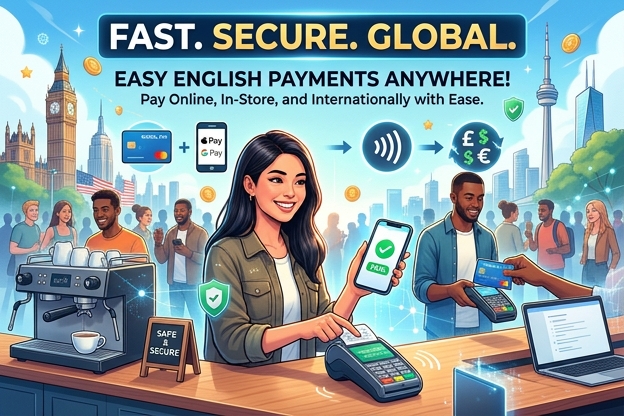
Your provider should support the way your customers want to pay. For many U.S. merchants, that means card payments, Apple Pay, Google Pay, PayPal, ACH, and in some categories, buy now, pay later options. If you sell internationally, local payment methods matter even more. According to Worldpay’s 2024 Global Payments Report, digital wallets continue to account for a major share of global e-commerce value, and that share is expected to keep growing through 2026.
Fraud controls and chargeback management
Good fraud tools are not just about blocking suspicious transactions. They are about blocking bad orders while approving more good ones. That requires configurable rules, velocity checks, device intelligence, address verification, 3-D Secure support where appropriate, and clear workflows for reviewing flagged transactions. Merchants in higher-risk categories should also ask whether the provider offers dispute alerts, representment support, and chargeback analytics.
Integration depth
Some providers are perfect for a simple Shopify store. Others are better for custom carts, marketplaces, omnichannel brands, or subscription businesses that need API-level control. If your business uses a CRM, ERP, fraud engine, tax platform, or billing layer, confirm the payment system can connect without expensive workarounds.
Operational reporting and support
You need reporting that helps finance, operations, and marketing all make better decisions. Can you break down declines by issuer response code? Can you separate domestic and international costs? Can you track approval rates by device or campaign source? These details are where margin is won or lost.
How Different Provider Types Compare
Not every provider category serves the same kind of merchant. Aggregators are fast and simple, traditional merchant account providers offer more control, and specialized high-risk processors are often necessary when mainstream platforms limit or reject an industry.
| Provider Type | Best For | Main Advantage | Main Limitation |
|---|---|---|---|
| Payment aggregator | Startups, low-risk stores, quick launch brands | Fast onboarding and simple setup | Less underwriting control and higher risk of account holds |
| Traditional merchant account provider | Established retailers with steady volume | More stable processing relationship and customized pricing | Longer approval process and more documentation |
| High-risk payment specialist | CBD, adult, coaching, travel, subscriptions, nutraceuticals | Risk-tolerant underwriting and chargeback expertise | Higher rates and possible rolling reserves |
| Enterprise payment orchestration platform | Large multichannel and multinational brands | Routing flexibility and optimization across multiple acquirers | Higher implementation complexity and cost |
There is no universally best category. There is only the one that fits your current volume, complexity, and risk tolerance.
How to Choose the Right Provider for Your Business
A structured evaluation process keeps you from making a rushed decision based on marketing claims. This is one area where discipline pays off quickly.
Questions to answer before you compare vendors
Start by defining your own operating reality. A provider cannot be “right” if your internal needs are vague.
- Map your business model: one-time sales, subscriptions, high-ticket orders, pre-orders, marketplaces, or a mix.
- List your average ticket size, monthly volume, chargeback ratio, and sales geographies.
- Identify which payment methods your customers already prefer and which ones you need to add.
- Clarify your integration needs with your cart, billing system, ERP, CRM, and fraud tools.
- Estimate your tolerance for reserves, underwriting documentation, and implementation time.
- Request proposals that include pricing, settlement timing, fraud tools, support structure, and termination terms.
- Run a pilot or phased rollout whenever possible instead of migrating everything at once.
What to ask on the sales call
Ask direct, specific questions. How are reserves structured? Who owns the merchant relationship? What is the process if chargebacks spike? How do they support retries on soft declines? Can they share benchmarks for approval rates in your vertical? A vague answer here usually signals future frustration.
“If a provider cannot explain how they handle disputes, reserves, and account reviews before you sign, expect that lack of clarity to continue after launch.”
Fees, Risk, and Compliance Realities
Pricing in payments can look simple at first and become messy very quickly. Interchange-plus, flat-rate, tiered pricing, gateway fees, monthly platform charges, international card surcharges, statement fees, retrieval fees, and chargeback penalties all change your true cost. A cheaper quote can still be the more expensive option if it comes with lower approval rates or stricter reserve terms.
Common cost areas merchants overlook
- Cross-border and currency conversion fees
- Card updater and tokenization charges
- Monthly minimums or platform commitments
- Chargeback and retrieval request fees
- Early termination clauses
- Reserve holdbacks that impact working capital
Compliance is not optional
PCI DSS is the baseline, not the finish line. Depending on your products and audience, you may also need stronger controls around recurring billing disclosures, card-on-file consent, refund timelines, age verification, or state-level privacy rules. According to Verizon’s 2024 Payment Security Report, organizations that reduce cardholder data exposure through tokenization and tighter access controls are generally better positioned to limit payment security incidents.
There is also a reputational layer. If your descriptor is unclear, your billing practices are confusing, or your refund policy is hard to find, chargebacks tend to rise even when customers received the product. Good payment operations are part finance, part risk management, and part customer experience.
What We Have Seen in the Field
I have seen merchants spend months trying to lower rates while ignoring the bigger problem: they were losing approved orders and absorbing preventable chargebacks. One case that stands out involved a subscription-based wellness brand that came to High Risk Credit Card Processing after an aggregator began holding funds during a seasonal sales spike. The brand had strong demand, but the processor viewed the sudden volume increase as risk. Cash flow tightened right when ad spend was climbing.
We helped the merchant move to a more suitable payment setup with underwriting designed for recurring billing and higher dispute sensitivity. The key changes were not flashy. We tightened checkout language, improved descriptor clarity, enabled better fraud screening, and aligned the reserve structure with the business model instead of forcing a one-size-fits-all arrangement. Within a few billing cycles, the merchant saw more stable payouts and a noticeable reduction in customer disputes tied to confusion rather than fraud.
In another engagement, I worked with a digital education seller whose valid transactions were getting declined at a painful rate. The problem was not product quality. It was a mismatch between the merchant profile and the processor’s risk appetite, plus weak retry logic on soft declines. Through High Risk Credit Card Processing, the business adopted a provider with better issuer routing support and stronger recurring transaction handling. The merchant did pay a slightly higher nominal rate, but net revenue improved because more good customers got through checkout and fewer subscriptions failed silently.
Those experiences shaped one of my strongest recommendations: never evaluate a payment provider only by the line item on the proposal. Evaluate how the provider handles your actual sales pattern under stress.
Where E-Commerce Payments Are Headed
The next wave of payment strategy is less about adding random payment methods and more about intelligent optimization. Larger merchants are increasingly using payment orchestration, multi-processor routing, network tokens, and localized payment methods to improve approvals and resilience. Even mid-market brands are starting to care about issuer routing logic and subscription retry performance.
According to Juniper Research’s 2024 market outlook, global e-commerce payment volume is expected to continue growing sharply over the next several years, with mobile and digital wallet usage driving much of that expansion. That means merchants will need providers that support convenience without weakening fraud defenses.
Trends worth watching closely
- Network tokenization for better security and card lifecycle management
- Greater use of digital wallets in both domestic and cross-border checkout
- AI-assisted fraud tools that score behavior in real time
- Payment orchestration for merchants using multiple processors
- Stricter scrutiny of subscription disclosures and recurring billing practices
- Growing demand for local payment methods in international expansion
There is a tradeoff, though. More tools can create more operational complexity. If your team is small, a simpler payment stack that is well managed may outperform an advanced stack that nobody fully owns.
Practical Checklist Before You Sign
Before you commit, pressure-test the provider across commercial, technical, and risk dimensions. A polished demo does not tell you what happens during a fraud spike or a holiday volume surge.
Review this short checklist
- Confirm all pricing components in writing
- Read reserve terms and payout schedules carefully
- Validate supported payment methods and countries
- Ask who handles disputes and account reviews
- Check platform integration depth, not just basic compatibility
- Test checkout speed and mobile UX
- Verify reporting granularity for finance and operations
- Ask for references from merchants in a similar vertical
Conclusion
Choosing the right payment provider is really about protecting revenue, reducing friction, and giving your business room to grow without avoidable processor-related setbacks. The strongest e-commerce payment setup balances conversion, fraud prevention, compliance, support quality, and realistic economics.
For merchants that operate in complex or high-risk categories, the stakes are even higher. A provider that understands underwriting nuance, reserves, recurring billing, and dispute controls can make the difference between stable growth and constant operational stress.
High Risk Credit Card Processing recommends three next steps: audit your current approval rates and chargeback trends, request side-by-side proposals that show your true effective cost, and run a controlled pilot before making a full migration. That approach gives you evidence, not guesswork.
References
- Baymard Institute, 2025 checkout usability research — highlighted the ongoing impact of checkout friction on cart abandonment and conversion performance.
- Worldpay Global Payments Report, 2024 — provided direction on the growing role of digital wallets and shifting consumer payment preferences.
- Verizon Payment Security Report, 2024 — informed the discussion on payment security practices, tokenization, and card data protection.
- Juniper Research, 2024 market outlook — supported the forward-looking view on e-commerce payment growth and mobile payment adoption.
FAQ
What is an e-commerce payment solution?
An e-commerce payment solution is the combination of tools that lets an online store accept, process, secure, and settle customer payments. It may include a payment gateway, merchant account, fraud controls, checkout integrations, reporting, and support for cards, wallets, ACH, and recurring billing.
How do I evaluate e commerce payment solution: A Complete Guide to Choosing the Right Provider options for my store?
Compare providers using real business criteria, not just headline rates. Focus on:
Approval rates and decline handling
Total effective cost, including hidden fees
Fraud tools and chargeback support
Integration with your platform and billing workflows
Settlement speed, reserves, and underwriting fit
What payment methods should an online store offer?
Most U.S. stores should at least support:
Major credit and debit cards
Apple Pay and Google Pay
PayPal or a similar wallet option
ACH for selected categories or higher-ticket sales
Buy now, pay later where it fits the audience and average order value
Why do some merchants need a high-risk payment provider?
Merchants in categories with elevated chargeback risk, recurring billing complexity, higher refund rates, regulatory scrutiny, or cross-border exposure often need a specialist. A high-risk provider is more likely to understand underwriting nuance, reserve structures, and dispute prevention specific to that business model.
How can I reduce chargebacks without hurting conversion?
Use targeted controls instead of blanket rejection rules. Strong approaches include:
Clear billing descriptors and refund policies
Smart fraud screening with manual review for edge cases
Order confirmation and shipping transparency
Recurring billing reminders for subscription merchants
Dispute alerts and faster customer service response times
Are lower processing rates always better?
Not always. A lower quoted rate can still cost more if the provider produces weaker approval rates, slower payouts, stricter reserves, poor fraud controls, or limited support. Net revenue and payment stability matter more than a single rate line on a proposal.