Learn how a cloud payment gateway improves security, scalability, fraud control, and approvals for growing businesses with insights from High Risk Credit Card Processing
Why Cloud Payment Gateway Performance Now Shapes Revenue
If your checkout is slow, fragile, or inconsistent across channels, revenue leaks fast. A strong Cloud Payment Gateway: Secure, Scalable Online Payment Processing for Businesses strategy helps companies reduce failed transactions, protect customer data, and keep sales moving during traffic spikes. For merchants in regulated, high-risk, or fast-growth categories, those gains are not optional. They are operational survival.
High Risk Credit Card Processing is one of the specialist providers businesses turn to when standard payment setups fall short. From multi-processor routing to fraud controls and compliance support, the difference between a basic gateway and a resilient cloud-first payment stack often shows up in approval rates, chargeback trends, and customer trust.
A cloud payment gateway is a hosted payment infrastructure layer that securely connects your website, app, subscription platform, or point-of-sale system to processors, acquirers, fraud tools, and banking networks. It handles payment authorization, encryption, tokenization, routing, and transaction monitoring without requiring merchants to maintain heavy on-premises systems.
For business owners, that means faster deployment, better uptime, easier scaling, and more flexibility when adding new sales channels, currencies, and fraud rules. The right setup can improve both customer experience and financial control at the same time.
Table of Contents
- What a cloud payment gateway actually does
- Why businesses are shifting from legacy systems
- The security architecture that matters most
- How scalability affects conversion and uptime
- Choosing features by business model
- Real-world implementation lessons from High Risk Credit Card Processing
- Risks, limitations, and common mistakes
- How to evaluate providers and launch the right stack
- What is changing in payment infrastructure through 2026
What a Cloud Payment Gateway Actually Does
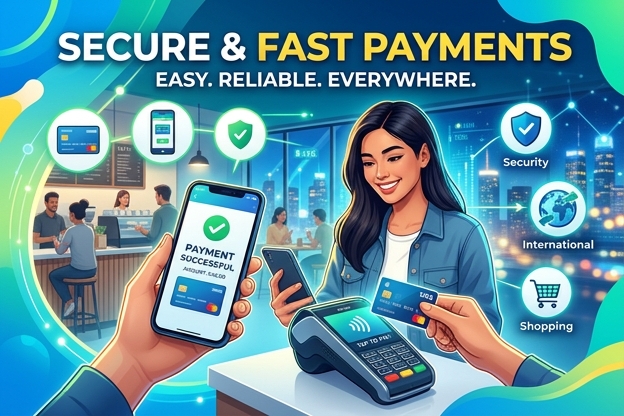
A cloud payment gateway is more than a digital cash register. It is the orchestration layer between your front-end checkout and the payment ecosystem behind it. When a buyer enters card or wallet details, the gateway encrypts the data, applies fraud screening, tokenizes sensitive fields, sends the request to an acquiring bank or processor, and returns an approval or decline in seconds.
What makes the cloud model different is how it is deployed and maintained. Instead of relying on rigid local infrastructure, cloud-based gateways run on hosted environments designed for continuous updates, API connectivity, global availability, and elastic capacity. That matters when your business adds subscriptions, omnichannel sales, digital invoicing, ACH, alternative payment methods, or international customers.
At the merchant level, the gateway usually supports:
- Hosted payment pages and embedded checkout
- Tokenization for stored credentials and recurring billing
- Fraud scoring, velocity checks, and rules engines
- Multi-currency and cross-border acceptance
- Retry logic and smart transaction routing
- Reporting, settlement visibility, and reconciliation tools
- Connections to CRMs, ERPs, shopping carts, and billing systems
According to the 2024 Verizon Data Breach Investigations Report, credential abuse, system intrusion, and web application attacks remain persistent threats across commerce environments. That is one reason hosted and tokenized architectures continue gaining traction: they reduce direct exposure to sensitive card data and narrow the merchant’s attack surface.
Why Businesses Are Shifting from Legacy Systems
Legacy payment systems often fail in quiet ways. They produce more false declines than your dashboard reveals. They create reconciliation delays that frustrate finance teams. They break when new sales channels are added. They also tend to make compliance and fraud prevention harder because data sits in too many places.
A modern cloud setup addresses those pain points with centralized controls and faster integrations. It also supports the business reality that payments no longer happen in one environment. A customer may start on mobile, complete on desktop, renew through subscription billing, and later request a one-click upsell or invoice payment. A fragmented stack turns each of those steps into a risk point.
According to the 2024 PYMNTS Intelligence research on checkout and digital commerce behavior, consumers continue to abandon purchases when checkout friction rises, especially on mobile devices. Fast form loading, wallet support, and consistent authorization flows directly affect conversion. That puts payment infrastructure in the same conversation as UX, not behind it.
“The best gateways are invisible when they work and brutally obvious when they don’t. Revenue teams feel the difference before IT does.”
The Security Architecture That Matters Most
Security claims are easy to make and harder to verify. A trustworthy cloud payment gateway should support PCI DSS-aligned practices, strong encryption in transit and at rest, tokenization, role-based access controls, audit logs, and reliable incident response procedures. Those basics still matter, but businesses also need practical defenses against account takeover, card testing, bot traffic, refund abuse, and synthetic identity fraud.
Tokenization is especially important. Rather than storing raw payment credentials in your environment, the gateway replaces that data with tokens that can be used for recurring billing and customer vaulting without exposing actual card numbers. This lowers risk, simplifies parts of compliance, and helps merchants operate more safely across subscriptions and stored-payment use cases.
Good security is not only about stopping external attackers. It is also about limiting operational mistakes. The most costly failures I see usually involve weak user permissions, unclear refund workflows, unmanaged API keys, or poor separation between test and production environments.
| Business Type | Primary Risk | Gateway Capability Needed | Operational Benefit |
|---|---|---|---|
| Subscription wellness brand | Friendly fraud and rebilling disputes | Tokenization, account updater, retry logic | Higher recurring approval rates |
| Online gaming operator | Chargebacks and geolocation fraud | Velocity rules, device fingerprinting, routing | Lower fraud losses and fewer processor alerts |
| B2B SaaS platform | Failed renewals and invoice complexity | Vaulting, ACH support, billing APIs | Cleaner collections and lower churn |
| Global ecommerce retailer | Cross-border declines | Multi-currency, local acquiring, smart routing | Better international conversion |
| Telehealth provider | Sensitive data exposure | Hosted fields, tokenization, audit logs | Reduced compliance burden |
How Scalability Affects Conversion and Uptime
Scalability sounds technical, but customers experience it emotionally. During a launch, holiday surge, or viral promotion, they either pay smoothly or they leave angry. A cloud payment gateway should absorb traffic spikes, preserve response times, and avoid processor bottlenecks through queueing, failover paths, and routing flexibility.
According to the 2025 Thales Data Threat Report, cloud security maturity and operational resilience remain top concerns as organizations expand digital services. Payments sit at the center of that pressure because every latency issue has a direct revenue consequence. A gateway that scales well is not just about capacity. It is about resilience under stress.
Scalability also matters for business growth paths such as:
- Adding international markets without rebuilding checkout
- Launching subscription products next to one-time sales
- Accepting digital wallets and bank payments
- Running campaigns that produce sudden traffic surges
- Supporting multiple MID and processor relationships
One overlooked factor is observability. If your team cannot quickly see approval rates by issuer, processor, geography, or payment method, you cannot fix scale problems efficiently. Strong cloud gateways give operational teams transaction-level insight, not just top-line totals.
Choosing Features by Business Model
Not every company needs the same gateway stack. A direct-to-consumer subscription merchant has different needs than a B2B invoicing platform or a high-risk nutraceutical seller. The right buying question is not “Which gateway has the most features?” It is “Which gateway removes the most friction from our actual revenue model?”
Here is a practical way to think about feature fit:
- Map your payment flows by channel: website, app, invoice, recurring billing, phone orders, and POS if relevant.
- List your failure points: declines, fraud spikes, cart abandonment, settlement delays, customer support refunds, and chargebacks.
- Identify data sensitivity and compliance pressure by use case.
- Match gateway features to those pain points, especially tokenization, routing, account updater, wallet support, and reporting.
- Test the experience under load before rollout, not after complaints start.
For higher-risk merchants, routing flexibility can be the difference between growth and stagnation. The ability to direct transactions based on BIN, geography, ticket size, or processor performance often produces better approvals while reducing concentration risk with any one acquiring relationship.
“Merchants often shop for rates first. Mature operators shop for approval quality, routing control, and reporting depth because that is where margin hides.”
Real-World Implementation Lessons From High Risk Credit Card Processing
I have seen this play out with merchants that were losing revenue for reasons they could not initially explain. In one case, a subscription-based wellness seller came to High Risk Credit Card Processing after repeated billing failures and rising chargebacks. Their original setup worked fine at low volume, but it had weak retry logic, limited fraud tuning, and poor visibility into issuer-specific declines.
We restructured the payment flow around a cloud gateway with tokenized vaulting, account updater support, and better routing options. Within a few billing cycles, failed renewals became more predictable, support tickets dropped, and the merchant could finally separate genuine fraud from avoidable payment friction. What stood out most was not a dramatic redesign of the front end. It was cleaner orchestration in the background.
In another project, I worked with a digital services brand expanding into multiple regions with mixed card acceptance patterns. The old gateway treated every transaction the same way. That looked simple on paper, but in practice it led to international declines and manual review overload. After moving to a more flexible cloud architecture, we could apply region-specific logic, streamline fraud review, and improve uptime during promotion periods.
The lesson is consistent: businesses rarely outgrow payments all at once. They outgrow them in fragments. A checkout page still loads, but refunds become messy. Authorization rates slip by a few points. Reconciliation takes longer. Then one high-volume week exposes the whole problem. Cloud infrastructure gives you room to fix those cracks before they become revenue emergencies.

Risks, Limitations, and Common Mistakes
Cloud payment gateways are powerful, but they are not magic. They introduce their own decisions and tradeoffs. If you pick a provider with weak support, limited processor relationships, shallow reporting, or rigid APIs, you can end up with a prettier version of the same old bottleneck.
Common mistakes include over-customizing early, ignoring decline analytics, skipping legal and compliance reviews, and failing to plan incident response procedures. Another major issue is vendor concentration. If one provider controls your gateway, fraud tooling, and processing path with no backup plan, you may have created a single point of failure.
There are also cost realities. Hosted platforms can reduce internal infrastructure burden, but transaction fees, premium features, and cross-border services add up. Businesses should compare total economic impact, not just headline rates. A lower fee structure is not better if it leads to worse approvals, weaker security controls, or higher customer churn.
The healthiest approach is balanced: value the cloud for speed and flexibility, but verify redundancy, service-level commitments, escalation support, and data portability before signing.
How to Evaluate Providers and Launch the Right Stack
Provider selection should be run like a revenue and risk decision, not just a procurement task. Your best option depends on whether you need international support, recurring billing sophistication, high-risk tolerance, processor redundancy, or custom fraud logic.
Use this evaluation checklist during demos and negotiations:
- What payment methods are native versus third-party add-ons?
- How does the platform handle tokenization, vaulting, and stored credentials?
- Can transactions be routed across multiple processors or MIDs?
- What reporting exists for decline codes, issuer behavior, and chargeback patterns?
- What uptime history and failover architecture can the provider document?
- How quickly can your team implement and test APIs or hosted fields?
- What support model applies during incidents or traffic spikes?
- How portable is your data if you switch providers later?
For many merchants, the ideal rollout starts small: one payment flow, one customer segment, and a controlled A/B performance comparison. That reduces migration risk while giving you real approval, fraud, and conversion data.
What Is Changing in Payment Infrastructure Through 2026
The next phase of payment infrastructure is less about flashy front-end checkout design and more about orchestration, intelligence, and resilience. Businesses want fewer isolated tools and more coordinated systems that adapt in real time.
Three shifts stand out. First, smart routing and retry logic are becoming standard expectations rather than premium extras. Second, tokenized payment credentials will matter even more as subscriptions, one-click experiences, and omnichannel commerce continue growing. Third, AI-assisted fraud screening will keep expanding, though it must be monitored carefully to avoid bias and false-positive decline rates.
There is also growing pressure around privacy, auditability, and regional payment preferences. A gateway that cannot support local methods, transparent logs, and policy controls will struggle to keep pace. The strongest providers are building for flexibility, not for one checkout template.
For merchants, that means the best time to rethink payment architecture is usually before a crisis. Waiting until authorization rates fall or a processor relationship tightens leaves fewer options.
Final Takeaways and Next Actions
A cloud payment gateway can strengthen security, improve scalability, and create a smoother path between customer intent and completed revenue. The payoff is strongest when the gateway is treated as a core business system tied to conversion, fraud control, compliance, and operational visibility.
High Risk Credit Card Processing typically recommends three next actions for merchants evaluating their setup:
- Audit your current payment flow for hidden revenue loss, especially false declines, failed renewals, and processor concentration risk.
- Prioritize tokenization, reporting depth, and routing flexibility before focusing only on headline processing rates.
- Run a staged implementation plan with measurable benchmarks for approvals, fraud, uptime, and support response.
If your business depends on stable online revenue, the gateway should not be an afterthought. It should be part of your growth plan.
References
- Verizon 2024 Data Breach Investigations Report — provided current context on web application attacks, credential abuse, and payment-related security exposure.
- PYMNTS Intelligence 2024 checkout and digital commerce research — informed points on checkout friction, mobile behavior, and purchase abandonment.
- Thales 2025 Data Threat Report — supported discussion of cloud security maturity, resilience, and enterprise concerns around hosted environments.
FAQ
What is a cloud payment gateway?
A cloud payment gateway is a hosted system that securely transmits payment data between your checkout, processor, acquiring bank, and fraud tools. It usually includes encryption, tokenization, transaction routing, and reporting so businesses can accept payments without maintaining heavy local infrastructure.
How secure is Cloud Payment Gateway: Secure, Scalable Online Payment Processing for Businesses?
Security depends on the provider and configuration, but strong cloud gateways are generally very secure when they include PCI-aligned controls, tokenization, encryption, access management, fraud screening, and audit logs. Merchants still need sound internal practices, especially around user permissions and API key management.
What features matter most for subscription and recurring billing merchants?
Recurring merchants should prioritize a few specific capabilities:
Tokenization and secure customer vaulting
Automatic card updater services
Smart retry logic for failed renewals
Detailed decline reporting and chargeback visibility
Can a cloud payment gateway help reduce false declines?
Yes. Better routing, cleaner fraud tuning, richer issuer response data, wallet support, and retry strategies can all help reduce unnecessary declines. Results vary by merchant category and processor relationships, but the right gateway often improves approval quality.
Is a cloud gateway a good fit for high-risk merchants?
Often, yes. High-risk businesses benefit from cloud gateways that support flexible fraud controls, multi-processor routing, tokenization, and strong reporting. The key is pairing the gateway with an acquirer and provider that understand the merchant’s vertical and risk profile.